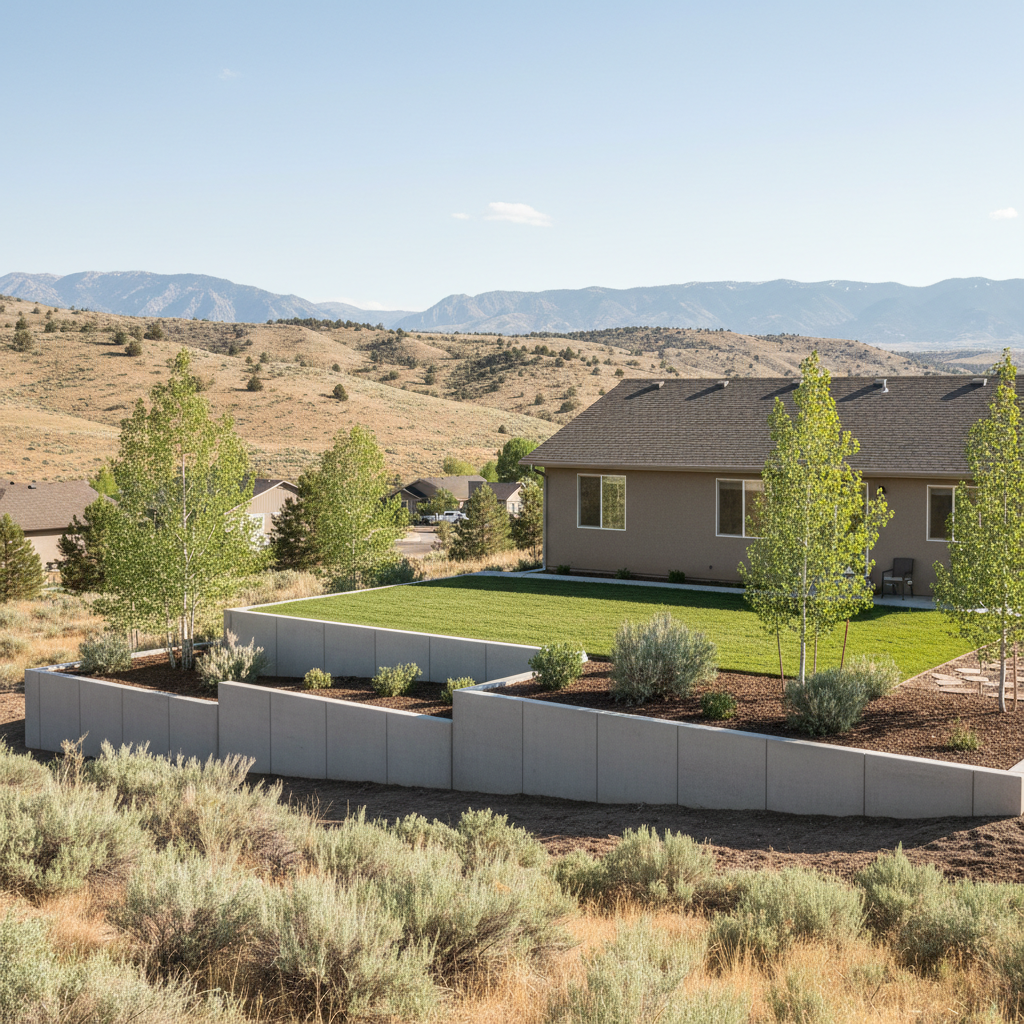
So, you're thinking about putting in a concrete retaining wall. Maybe your yard slopes, or you need to carve out some usable space, or perhaps you're just fed up with erosion slowly eating away at your landscape. Good call, really. Concrete retaining walls are tough, they last forever, and honestly, they look pretty sharp when they're done right. But what's this actually going to set you back, here in Layton?
What Makes the Price Go Up (or Down)?
Look, there's no single, easy answer, but I can definitely tell you what factors play into the final cost. Knowing these things helps you make sense of the quotes you'll get.
- Wall Size (Height & Length): This is the big one, obviously. A taller, longer wall just needs more material, more people working on it, and often, more engineering. A 4-foot wall is a totally different animal than an 8-foot one.
- Wall Type: Are we talking about a basic gravity wall? Or a cantilevered wall? Maybe something more complex like a counterfort wall? Gravity walls are usually the simplest and cheapest per square foot for shorter heights. Cantilevered walls, which rely on a footing and rebar to keep them from tipping over, are pretty common for medium to tall walls.
- Site Accessibility: Can we actually get our equipment in there easily? If we're hauling concrete and rebar by hand up a steep, narrow path behind your house – maybe in one of those older neighborhoods near Hill Air Force Base – that's definitely going to push up the labor cost. Easy access means less time and effort for everyone.
- Soil Conditions: This is a massive factor, especially around here. Layton soil can really vary. If we hit soft, expansive clay or a lot of rock, we might need to dig deeper, bring in more granular fill, or even use specialized equipment. Bad soil might even demand a bigger footing or some geogrid reinforcement, which adds both materials and time.
- Drainage Requirements: Any good retaining wall needs proper drainage. We're talking about a perforated pipe behind the wall, gravel backfill, and weep holes. Skimping here is just asking for trouble down the road, trust me. This is usually part of the package, but if your drainage needs are super complex, it could bump up the price.
- Finishing & Aesthetics: Do you want plain gray concrete, or are you hoping for something stamped, stained, or faced with stone veneer? Decorative finishes certainly add to the cost, but wow, they can really make the wall pop.
- Permits & Engineering: For walls over a certain height (often 4 feet here in Layton, but you should always double-check with the city), you'll need engineering plans and city permits. This isn't optional; it's all about safety and following the rules. These costs are usually separate from the actual construction, but they're absolutely necessary.
What Do Concrete Retaining Walls Typically Cost?
Alright, let's get down to brass tacks. Keep in mind these are just averages for a professionally installed, structurally sound concrete retaining wall right here in Layton. And these numbers don't usually include decorative finishes unless I say so.
- Basic Gravity Wall (3-4 feet high): You're generally looking at anywhere from $45 to $75 per linear foot. This is for a pretty straightforward, relatively short wall with good access and standard soil.
- Cantilevered Wall (4-6 feet high): For something a bit taller, with the right footings and rebar reinforcement, expect to pay between $70 and $120 per linear foot. This is a very common type of wall for most homes.
- Taller or More Complex Walls (7+ feet high): Once you get into these heights, costs can jump quite a bit. You might be looking at $110 to $200+ per linear foot, sometimes even more, depending on the engineering, how easy it is to get to the site, and the soil conditions. These often need much more substantial footings, thicker walls, and more rebar.
- Decorative Finishes: If you want stamped concrete, add another $10-$25 per square foot of the wall face. Staining is usually less, maybe $5-$10 per square foot.
So, a 50-foot long, 5-foot high cantilevered wall could easily run you between $3,500 and $6,000 before permits and any fancy finishes. A smaller, 30-foot long, 3-foot high gravity wall might be $1,350 to $2,250. See how quickly it adds up?
What Should Be in Your Quote?
When you get a quote from Aim High Concrete, or anyone else for that matter, it needs to be crystal clear. It should spell out:
- Excavation: How much digging, and what's included for getting rid of the dirt?
- Footing & Foundation Prep: All the details on the footing's size, the rebar, and any gravel base.
- Concrete & Rebar: Specifics on the concrete mix, how thick the wall will be, and the rebar schedule.
- Drainage System: Perforated pipe, gravel backfill, and weep holes. This is non-negotiable if you want a wall that actually lasts.
- Backfill: What material they're using to fill in behind the wall.
- Labor: The cost for the crew to do the actual work.
- Cleanup: What they'll do to leave your site tidy when they're finished.
- Warranty: What kind of guarantee they offer on their work.
What's usually NOT included in the main construction quote are things like engineering fees, city permit fees, or restoring your landscaping after the wall is built. Always, always ask for clarification on these.
How to Avoid Paying Too Much
You don't want to get ripped off, and you definitely don't want a cheap wall that falls apart in five years. Here's my best advice:
- Get Multiple Bids: Three is a good number to aim for. Don't just pick the cheapest one. Compare what each quote actually includes.
- Check References & Reviews: See what other folks in Layton are saying about their work. Word of mouth is powerful.
- Ask About Experience: Has the contractor built retaining walls like yours before? Do they really understand our local soil conditions?
- Don't Rush: A good contractor might have a waitlist, and that's okay. If someone can start tomorrow and their price seems suspiciously low, be cautious.
- Understand the Contract: Read absolutely everything. Ask questions until you get it. Make sure you know exactly what you're paying for and what you're not.
A well-built concrete retaining wall is a solid investment in your property. It adds value, stops erosion, and can truly transform your yard. Do your homework, ask the right questions, and you'll end up with a wall that stands strong for decades.